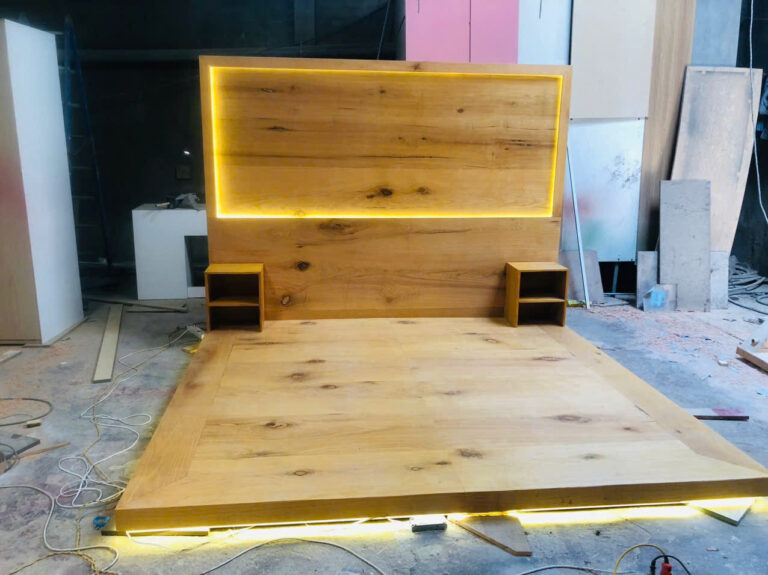
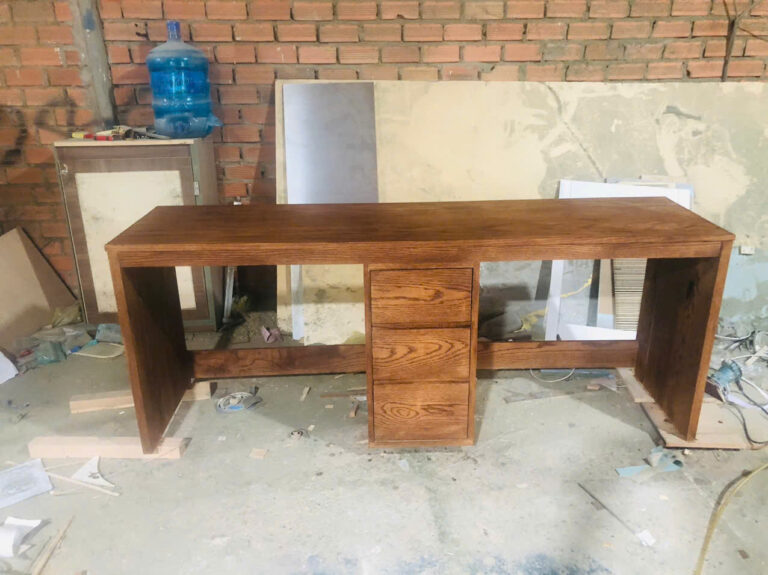
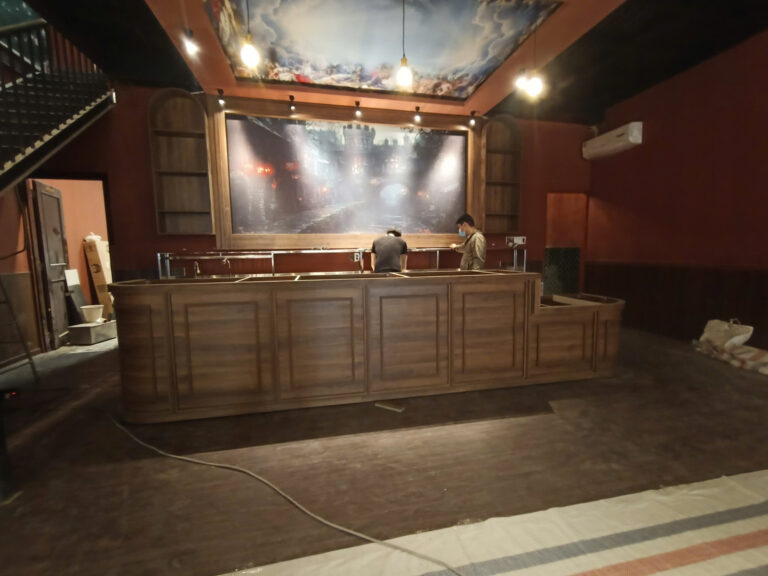
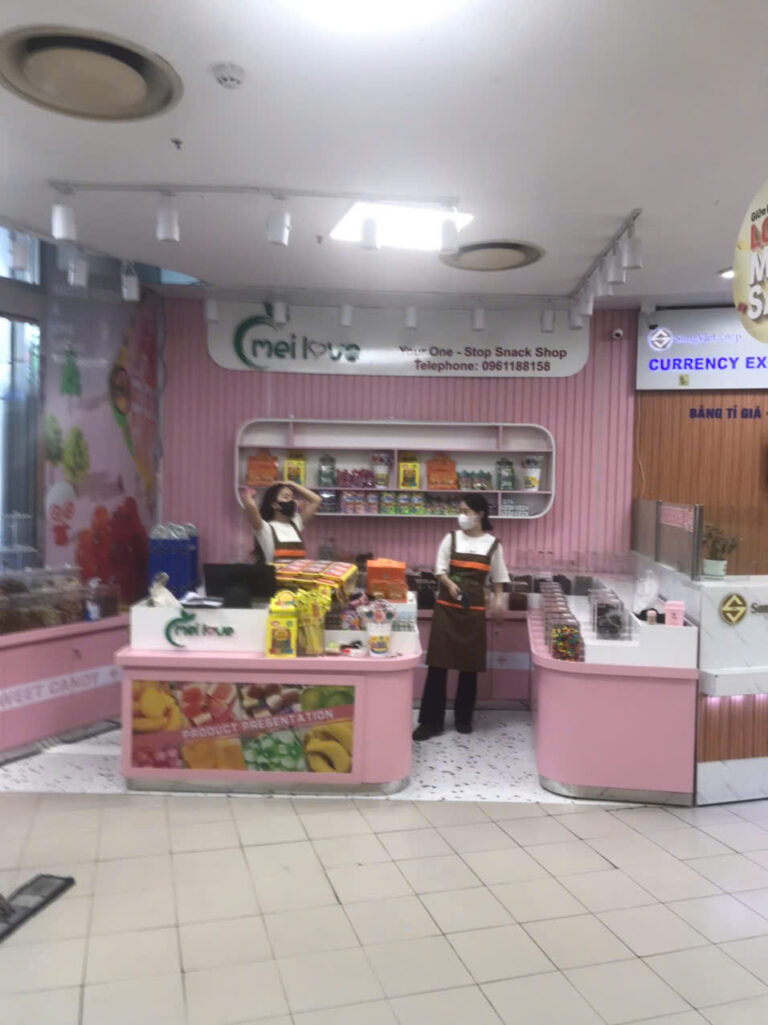
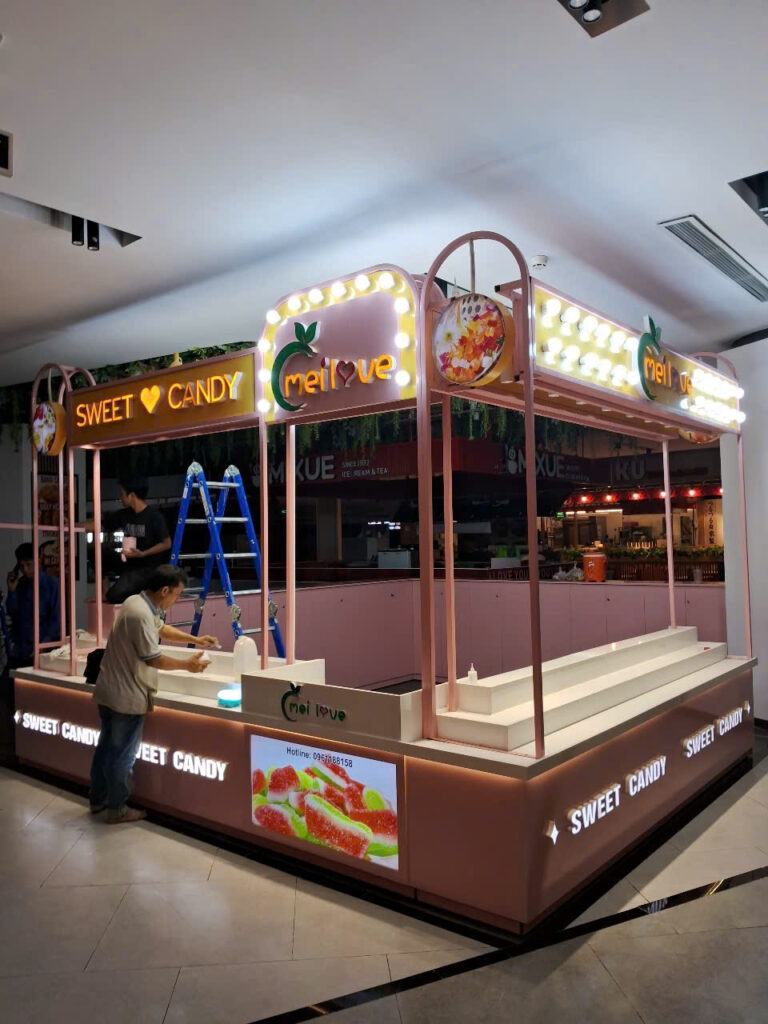
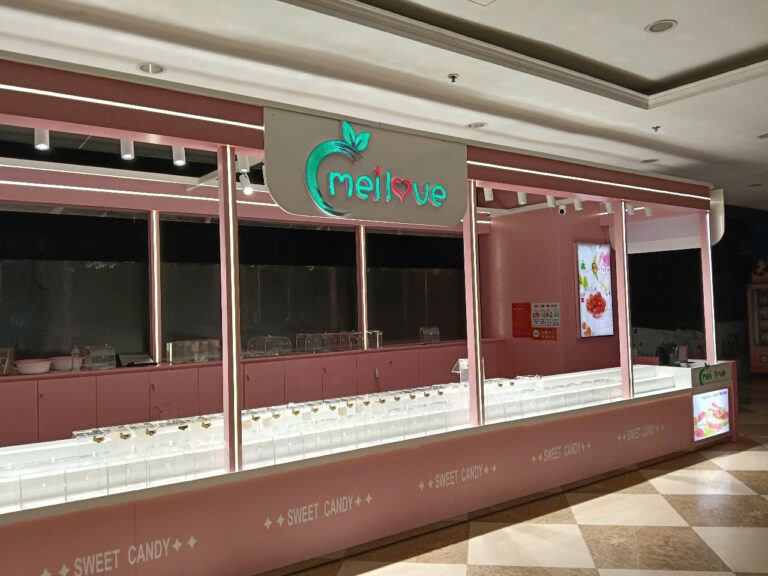
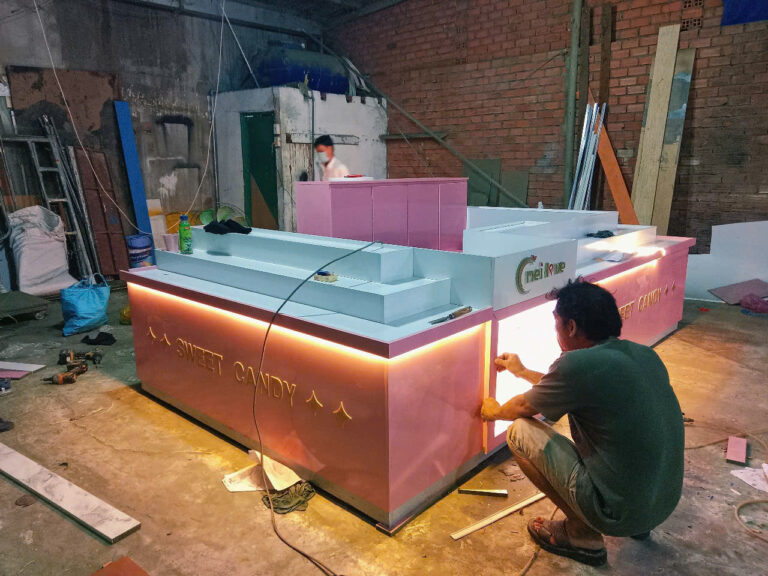
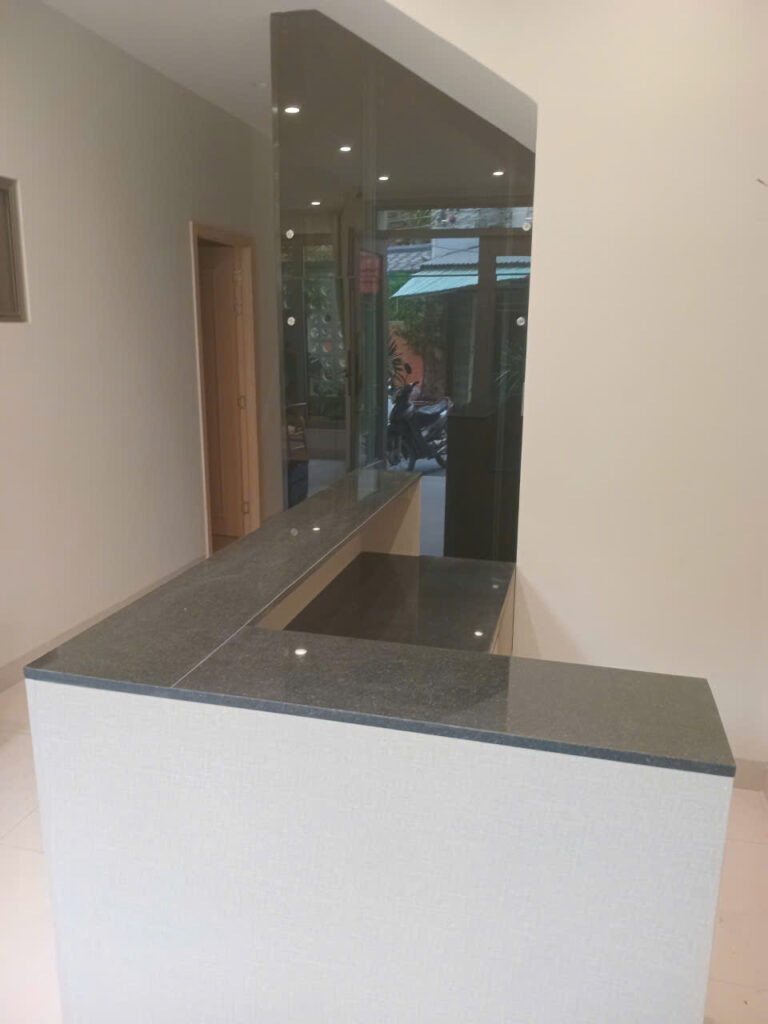
Overseas buyers sourcing custom shopfitting in Vietnam need a process that connects design intent with production control and shipment readiness. This guide explains how to specify counters, cabinets and retail display fixtures so the quotation, factory drawings and delivery package match the intended store.

Buyer brief
For buyer brief, the buyer should state the intended function, quantity, dimensions, finish and relationship to nearby fixtures. This is especially important when custom counters, cabinets and display fixtures must be quoted against one consistent item schedule. The drawing or schedule should identify the item code, reference dimension, approval owner and any open decision. Record what is fixed and what may vary by store, and state the acceptable tolerance or adjustment method where it matters. During review, test the requirement against use, cleaning, assembly and maintenance. Ask the person who receives or installs the unit to check access and handling. A detail that works in a rendering may still be difficult to assemble or service on site. For an international order, put the requirement in the fixture schedule or approved drawing rather than leaving it in an informal message. Identify the item code, who approves it and what evidence will demonstrate compliance. Where information is not final, mark it provisional and agree the confirmation date before production starts.
Fixture schedule
For fixture schedule, the buyer should state the intended function, quantity, dimensions, finish and relationship to nearby fixtures. This is especially important when custom counters, cabinets and display fixtures must be quoted against one consistent item schedule. The drawing or schedule should identify the item code, reference dimension, approval owner and any open decision. Record what is fixed and what may vary by store, and state the acceptable tolerance or adjustment method where it matters. During review, test the requirement against use, cleaning, assembly and maintenance. Ask the person who receives or installs the unit to check access and handling. A detail that works in a rendering may still be difficult to assemble or service on site. Ask the receiving or installation team to review the detail before the production release. They can identify access, handling, storage or maintenance constraints that may not appear in a rendering. Record decisions with the correct revision so purchasing, factory inspection and site teams use the same project baseline.
Store operations
For store operations, the buyer should state the intended function, quantity, dimensions, finish and relationship to nearby fixtures. This is especially important when custom counters, cabinets and display fixtures must be quoted against one consistent item schedule. The drawing or schedule should identify the item code, reference dimension, approval owner and any open decision. Record what is fixed and what may vary by store, and state the acceptable tolerance or adjustment method where it matters. During review, test the requirement against use, cleaning, assembly and maintenance. Ask the person who receives or installs the unit to check access and handling. A detail that works in a rendering may still be difficult to assemble or service on site. Consider the whole route from factory floor to final store: packing, handling, temporary storage, unpacking and assembly. Each handoff can create a different risk. A documented check, clear carton identification and a practical installation instruction make the approved design easier to reproduce after shipment.
Dimensioned drawings
For dimensioned drawings, the buyer should state the intended function, quantity, dimensions, finish and relationship to nearby fixtures. This is especially important when custom counters, cabinets and display fixtures must be quoted against one consistent item schedule. The drawing or schedule should identify the item code, reference dimension, approval owner and any open decision. Record what is fixed and what may vary by store, and state the acceptable tolerance or adjustment method where it matters. During review, test the requirement against use, cleaning, assembly and maintenance. Ask the person who receives or installs the unit to check access and handling. A detail that works in a rendering may still be difficult to assemble or service on site. Before accepting a quotation, check what is included and excluded. Confirm materials, hardware, finish, inspection, packaging, export documents, delivery point and installation assistance. When scope is clear, the buyer can compare offers fairly and reduce late changes that affect cost, lead time or freight.

Material specification
For material specification, the buyer should state the intended function, quantity, dimensions, finish and relationship to nearby fixtures. This is especially important when custom counters, cabinets and display fixtures must be quoted against one consistent item schedule. The drawing or schedule should identify the item code, reference dimension, approval owner and any open decision. Record what is fixed and what may vary by store, and state the acceptable tolerance or adjustment method where it matters. During review, test the requirement against use, cleaning, assembly and maintenance. Ask the person who receives or installs the unit to check access and handling. A detail that works in a rendering may still be difficult to assemble or service on site. For an international order, put the requirement in the fixture schedule or approved drawing rather than leaving it in an informal message. Identify the item code, who approves it and what evidence will demonstrate compliance. Where information is not final, mark it provisional and agree the confirmation date before production starts.
POS coordination
For pos coordination, the buyer should state the intended function, quantity, dimensions, finish and relationship to nearby fixtures. This is especially important when custom counters, cabinets and display fixtures must be quoted against one consistent item schedule. The drawing or schedule should identify the item code, reference dimension, approval owner and any open decision. Record what is fixed and what may vary by store, and state the acceptable tolerance or adjustment method where it matters. During review, test the requirement against use, cleaning, assembly and maintenance. Ask the person who receives or installs the unit to check access and handling. A detail that works in a rendering may still be difficult to assemble or service on site. Ask the receiving or installation team to review the detail before the production release. They can identify access, handling, storage or maintenance constraints that may not appear in a rendering. Record decisions with the correct revision so purchasing, factory inspection and site teams use the same project baseline.
Cable access
For cable access, the buyer should state the intended function, quantity, dimensions, finish and relationship to nearby fixtures. This is especially important when custom counters, cabinets and display fixtures must be quoted against one consistent item schedule. The drawing or schedule should identify the item code, reference dimension, approval owner and any open decision. Record what is fixed and what may vary by store, and state the acceptable tolerance or adjustment method where it matters. During review, test the requirement against use, cleaning, assembly and maintenance. Ask the person who receives or installs the unit to check access and handling. A detail that works in a rendering may still be difficult to assemble or service on site. Consider the whole route from factory floor to final store: packing, handling, temporary storage, unpacking and assembly. Each handoff can create a different risk. A documented check, clear carton identification and a practical installation instruction make the approved design easier to reproduce after shipment.
Shelf loading
For shelf loading, the buyer should state the intended function, quantity, dimensions, finish and relationship to nearby fixtures. This is especially important when custom counters, cabinets and display fixtures must be quoted against one consistent item schedule. The drawing or schedule should identify the item code, reference dimension, approval owner and any open decision. Record what is fixed and what may vary by store, and state the acceptable tolerance or adjustment method where it matters. During review, test the requirement against use, cleaning, assembly and maintenance. Ask the person who receives or installs the unit to check access and handling. A detail that works in a rendering may still be difficult to assemble or service on site. Before accepting a quotation, check what is included and excluded. Confirm materials, hardware, finish, inspection, packaging, export documents, delivery point and installation assistance. When scope is clear, the buyer can compare offers fairly and reduce late changes that affect cost, lead time or freight.

Edge protection
For edge protection, the buyer should state the intended function, quantity, dimensions, finish and relationship to nearby fixtures. This is especially important when custom counters, cabinets and display fixtures must be quoted against one consistent item schedule. The drawing or schedule should identify the item code, reference dimension, approval owner and any open decision. Record what is fixed and what may vary by store, and state the acceptable tolerance or adjustment method where it matters. During review, test the requirement against use, cleaning, assembly and maintenance. Ask the person who receives or installs the unit to check access and handling. A detail that works in a rendering may still be difficult to assemble or service on site. For an international order, put the requirement in the fixture schedule or approved drawing rather than leaving it in an informal message. Identify the item code, who approves it and what evidence will demonstrate compliance. Where information is not final, mark it provisional and agree the confirmation date before production starts.
Finish samples
For finish samples, the buyer should state the intended function, quantity, dimensions, finish and relationship to nearby fixtures. This is especially important when custom counters, cabinets and display fixtures must be quoted against one consistent item schedule. The drawing or schedule should identify the item code, reference dimension, approval owner and any open decision. Record what is fixed and what may vary by store, and state the acceptable tolerance or adjustment method where it matters. During review, test the requirement against use, cleaning, assembly and maintenance. Ask the person who receives or installs the unit to check access and handling. A detail that works in a rendering may still be difficult to assemble or service on site. Ask the receiving or installation team to review the detail before the production release. They can identify access, handling, storage or maintenance constraints that may not appear in a rendering. Record decisions with the correct revision so purchasing, factory inspection and site teams use the same project baseline.
Modular store rollouts
For modular store rollouts, the buyer should state the intended function, quantity, dimensions, finish and relationship to nearby fixtures. This is especially important when custom counters, cabinets and display fixtures must be quoted against one consistent item schedule. The drawing or schedule should identify the item code, reference dimension, approval owner and any open decision. Record what is fixed and what may vary by store, and state the acceptable tolerance or adjustment method where it matters. During review, test the requirement against use, cleaning, assembly and maintenance. Ask the person who receives or installs the unit to check access and handling. A detail that works in a rendering may still be difficult to assemble or service on site. Consider the whole route from factory floor to final store: packing, handling, temporary storage, unpacking and assembly. Each handoff can create a different risk. A documented check, clear carton identification and a practical installation instruction make the approved design easier to reproduce after shipment.
Prototype approval
For prototype approval, the buyer should state the intended function, quantity, dimensions, finish and relationship to nearby fixtures. This is especially important when custom counters, cabinets and display fixtures must be quoted against one consistent item schedule. The drawing or schedule should identify the item code, reference dimension, approval owner and any open decision. Record what is fixed and what may vary by store, and state the acceptable tolerance or adjustment method where it matters. During review, test the requirement against use, cleaning, assembly and maintenance. Ask the person who receives or installs the unit to check access and handling. A detail that works in a rendering may still be difficult to assemble or service on site. Before accepting a quotation, check what is included and excluded. Confirm materials, hardware, finish, inspection, packaging, export documents, delivery point and installation assistance. When scope is clear, the buyer can compare offers fairly and reduce late changes that affect cost, lead time or freight.

Revision control
For revision control, the buyer should state the intended function, quantity, dimensions, finish and relationship to nearby fixtures. This is especially important when custom counters, cabinets and display fixtures must be quoted against one consistent item schedule. The drawing or schedule should identify the item code, reference dimension, approval owner and any open decision. Record what is fixed and what may vary by store, and state the acceptable tolerance or adjustment method where it matters. During review, test the requirement against use, cleaning, assembly and maintenance. Ask the person who receives or installs the unit to check access and handling. A detail that works in a rendering may still be difficult to assemble or service on site. For an international order, put the requirement in the fixture schedule or approved drawing rather than leaving it in an informal message. Identify the item code, who approves it and what evidence will demonstrate compliance. Where information is not final, mark it provisional and agree the confirmation date before production starts.
Factory quality plan
For factory quality plan, the buyer should state the intended function, quantity, dimensions, finish and relationship to nearby fixtures. This is especially important when custom counters, cabinets and display fixtures must be quoted against one consistent item schedule. The drawing or schedule should identify the item code, reference dimension, approval owner and any open decision. Record what is fixed and what may vary by store, and state the acceptable tolerance or adjustment method where it matters. During review, test the requirement against use, cleaning, assembly and maintenance. Ask the person who receives or installs the unit to check access and handling. A detail that works in a rendering may still be difficult to assemble or service on site. Ask the receiving or installation team to review the detail before the production release. They can identify access, handling, storage or maintenance constraints that may not appear in a rendering. Record decisions with the correct revision so purchasing, factory inspection and site teams use the same project baseline.
Incoming materials
For incoming materials, the buyer should state the intended function, quantity, dimensions, finish and relationship to nearby fixtures. This is especially important when custom counters, cabinets and display fixtures must be quoted against one consistent item schedule. The drawing or schedule should identify the item code, reference dimension, approval owner and any open decision. Record what is fixed and what may vary by store, and state the acceptable tolerance or adjustment method where it matters. During review, test the requirement against use, cleaning, assembly and maintenance. Ask the person who receives or installs the unit to check access and handling. A detail that works in a rendering may still be difficult to assemble or service on site. Consider the whole route from factory floor to final store: packing, handling, temporary storage, unpacking and assembly. Each handoff can create a different risk. A documented check, clear carton identification and a practical installation instruction make the approved design easier to reproduce after shipment.
Machining checks
For machining checks, the buyer should state the intended function, quantity, dimensions, finish and relationship to nearby fixtures. This is especially important when custom counters, cabinets and display fixtures must be quoted against one consistent item schedule. The drawing or schedule should identify the item code, reference dimension, approval owner and any open decision. Record what is fixed and what may vary by store, and state the acceptable tolerance or adjustment method where it matters. During review, test the requirement against use, cleaning, assembly and maintenance. Ask the person who receives or installs the unit to check access and handling. A detail that works in a rendering may still be difficult to assemble or service on site. Before accepting a quotation, check what is included and excluded. Confirm materials, hardware, finish, inspection, packaging, export documents, delivery point and installation assistance. When scope is clear, the buyer can compare offers fairly and reduce late changes that affect cost, lead time or freight.

Finish inspection
For finish inspection, the buyer should state the intended function, quantity, dimensions, finish and relationship to nearby fixtures. This is especially important when custom counters, cabinets and display fixtures must be quoted against one consistent item schedule. The drawing or schedule should identify the item code, reference dimension, approval owner and any open decision. Record what is fixed and what may vary by store, and state the acceptable tolerance or adjustment method where it matters. During review, test the requirement against use, cleaning, assembly and maintenance. Ask the person who receives or installs the unit to check access and handling. A detail that works in a rendering may still be difficult to assemble or service on site. For an international order, put the requirement in the fixture schedule or approved drawing rather than leaving it in an informal message. Identify the item code, who approves it and what evidence will demonstrate compliance. Where information is not final, mark it provisional and agree the confirmation date before production starts.
Export packaging
For export packaging, the buyer should state the intended function, quantity, dimensions, finish and relationship to nearby fixtures. This is especially important when custom counters, cabinets and display fixtures must be quoted against one consistent item schedule. The drawing or schedule should identify the item code, reference dimension, approval owner and any open decision. Record what is fixed and what may vary by store, and state the acceptable tolerance or adjustment method where it matters. During review, test the requirement against use, cleaning, assembly and maintenance. Ask the person who receives or installs the unit to check access and handling. A detail that works in a rendering may still be difficult to assemble or service on site. Ask the receiving or installation team to review the detail before the production release. They can identify access, handling, storage or maintenance constraints that may not appear in a rendering. Record decisions with the correct revision so purchasing, factory inspection and site teams use the same project baseline.
Carton marking
For carton marking, the buyer should state the intended function, quantity, dimensions, finish and relationship to nearby fixtures. This is especially important when custom counters, cabinets and display fixtures must be quoted against one consistent item schedule. The drawing or schedule should identify the item code, reference dimension, approval owner and any open decision. Record what is fixed and what may vary by store, and state the acceptable tolerance or adjustment method where it matters. During review, test the requirement against use, cleaning, assembly and maintenance. Ask the person who receives or installs the unit to check access and handling. A detail that works in a rendering may still be difficult to assemble or service on site. Consider the whole route from factory floor to final store: packing, handling, temporary storage, unpacking and assembly. Each handoff can create a different risk. A documented check, clear carton identification and a practical installation instruction make the approved design easier to reproduce after shipment.
Freight planning
For freight planning, the buyer should state the intended function, quantity, dimensions, finish and relationship to nearby fixtures. This is especially important when custom counters, cabinets and display fixtures must be quoted against one consistent item schedule. The drawing or schedule should identify the item code, reference dimension, approval owner and any open decision. Record what is fixed and what may vary by store, and state the acceptable tolerance or adjustment method where it matters. During review, test the requirement against use, cleaning, assembly and maintenance. Ask the person who receives or installs the unit to check access and handling. A detail that works in a rendering may still be difficult to assemble or service on site. Before accepting a quotation, check what is included and excluded. Confirm materials, hardware, finish, inspection, packaging, export documents, delivery point and installation assistance. When scope is clear, the buyer can compare offers fairly and reduce late changes that affect cost, lead time or freight.

Installation scope
For installation scope, the buyer should state the intended function, quantity, dimensions, finish and relationship to nearby fixtures. This is especially important when custom counters, cabinets and display fixtures must be quoted against one consistent item schedule. The drawing or schedule should identify the item code, reference dimension, approval owner and any open decision. Record what is fixed and what may vary by store, and state the acceptable tolerance or adjustment method where it matters. During review, test the requirement against use, cleaning, assembly and maintenance. Ask the person who receives or installs the unit to check access and handling. A detail that works in a rendering may still be difficult to assemble or service on site. For an international order, put the requirement in the fixture schedule or approved drawing rather than leaving it in an informal message. Identify the item code, who approves it and what evidence will demonstrate compliance. Where information is not final, mark it provisional and agree the confirmation date before production starts.
Site sequencing
For site sequencing, the buyer should state the intended function, quantity, dimensions, finish and relationship to nearby fixtures. This is especially important when custom counters, cabinets and display fixtures must be quoted against one consistent item schedule. The drawing or schedule should identify the item code, reference dimension, approval owner and any open decision. Record what is fixed and what may vary by store, and state the acceptable tolerance or adjustment method where it matters. During review, test the requirement against use, cleaning, assembly and maintenance. Ask the person who receives or installs the unit to check access and handling. A detail that works in a rendering may still be difficult to assemble or service on site. Ask the receiving or installation team to review the detail before the production release. They can identify access, handling, storage or maintenance constraints that may not appear in a rendering. Record decisions with the correct revision so purchasing, factory inspection and site teams use the same project baseline.
Assembly manuals
For assembly manuals, the buyer should state the intended function, quantity, dimensions, finish and relationship to nearby fixtures. This is especially important when custom counters, cabinets and display fixtures must be quoted against one consistent item schedule. The drawing or schedule should identify the item code, reference dimension, approval owner and any open decision. Record what is fixed and what may vary by store, and state the acceptable tolerance or adjustment method where it matters. During review, test the requirement against use, cleaning, assembly and maintenance. Ask the person who receives or installs the unit to check access and handling. A detail that works in a rendering may still be difficult to assemble or service on site. Consider the whole route from factory floor to final store: packing, handling, temporary storage, unpacking and assembly. Each handoff can create a different risk. A documented check, clear carton identification and a practical installation instruction make the approved design easier to reproduce after shipment.
Acceptance checks
For acceptance checks, the buyer should state the intended function, quantity, dimensions, finish and relationship to nearby fixtures. This is especially important when custom counters, cabinets and display fixtures must be quoted against one consistent item schedule. The drawing or schedule should identify the item code, reference dimension, approval owner and any open decision. Record what is fixed and what may vary by store, and state the acceptable tolerance or adjustment method where it matters. During review, test the requirement against use, cleaning, assembly and maintenance. Ask the person who receives or installs the unit to check access and handling. A detail that works in a rendering may still be difficult to assemble or service on site. Before accepting a quotation, check what is included and excluded. Confirm materials, hardware, finish, inspection, packaging, export documents, delivery point and installation assistance. When scope is clear, the buyer can compare offers fairly and reduce late changes that affect cost, lead time or freight.

Spare parts
For spare parts, the buyer should state the intended function, quantity, dimensions, finish and relationship to nearby fixtures. This is especially important when custom counters, cabinets and display fixtures must be quoted against one consistent item schedule. The drawing or schedule should identify the item code, reference dimension, approval owner and any open decision. Record what is fixed and what may vary by store, and state the acceptable tolerance or adjustment method where it matters. During review, test the requirement against use, cleaning, assembly and maintenance. Ask the person who receives or installs the unit to check access and handling. A detail that works in a rendering may still be difficult to assemble or service on site. For an international order, put the requirement in the fixture schedule or approved drawing rather than leaving it in an informal message. Identify the item code, who approves it and what evidence will demonstrate compliance. Where information is not final, mark it provisional and agree the confirmation date before production starts.
Supplier comparison
For supplier comparison, the buyer should state the intended function, quantity, dimensions, finish and relationship to nearby fixtures. This is especially important when custom counters, cabinets and display fixtures must be quoted against one consistent item schedule. The drawing or schedule should identify the item code, reference dimension, approval owner and any open decision. Record what is fixed and what may vary by store, and state the acceptable tolerance or adjustment method where it matters. During review, test the requirement against use, cleaning, assembly and maintenance. Ask the person who receives or installs the unit to check access and handling. A detail that works in a rendering may still be difficult to assemble or service on site. Ask the receiving or installation team to review the detail before the production release. They can identify access, handling, storage or maintenance constraints that may not appear in a rendering. Record decisions with the correct revision so purchasing, factory inspection and site teams use the same project baseline.
Risk register
For risk register, the buyer should state the intended function, quantity, dimensions, finish and relationship to nearby fixtures. This is especially important when custom counters, cabinets and display fixtures must be quoted against one consistent item schedule. The drawing or schedule should identify the item code, reference dimension, approval owner and any open decision. Record what is fixed and what may vary by store, and state the acceptable tolerance or adjustment method where it matters. During review, test the requirement against use, cleaning, assembly and maintenance. Ask the person who receives or installs the unit to check access and handling. A detail that works in a rendering may still be difficult to assemble or service on site. Consider the whole route from factory floor to final store: packing, handling, temporary storage, unpacking and assembly. Each handoff can create a different risk. A documented check, clear carton identification and a practical installation instruction make the approved design easier to reproduce after shipment.
Production release
For production release, the buyer should state the intended function, quantity, dimensions, finish and relationship to nearby fixtures. This is especially important when custom counters, cabinets and display fixtures must be quoted against one consistent item schedule. The drawing or schedule should identify the item code, reference dimension, approval owner and any open decision. Record what is fixed and what may vary by store, and state the acceptable tolerance or adjustment method where it matters. During review, test the requirement against use, cleaning, assembly and maintenance. Ask the person who receives or installs the unit to check access and handling. A detail that works in a rendering may still be difficult to assemble or service on site. Before accepting a quotation, check what is included and excluded. Confirm materials, hardware, finish, inspection, packaging, export documents, delivery point and installation assistance. When scope is clear, the buyer can compare offers fairly and reduce late changes that affect cost, lead time or freight.
Shipment readiness
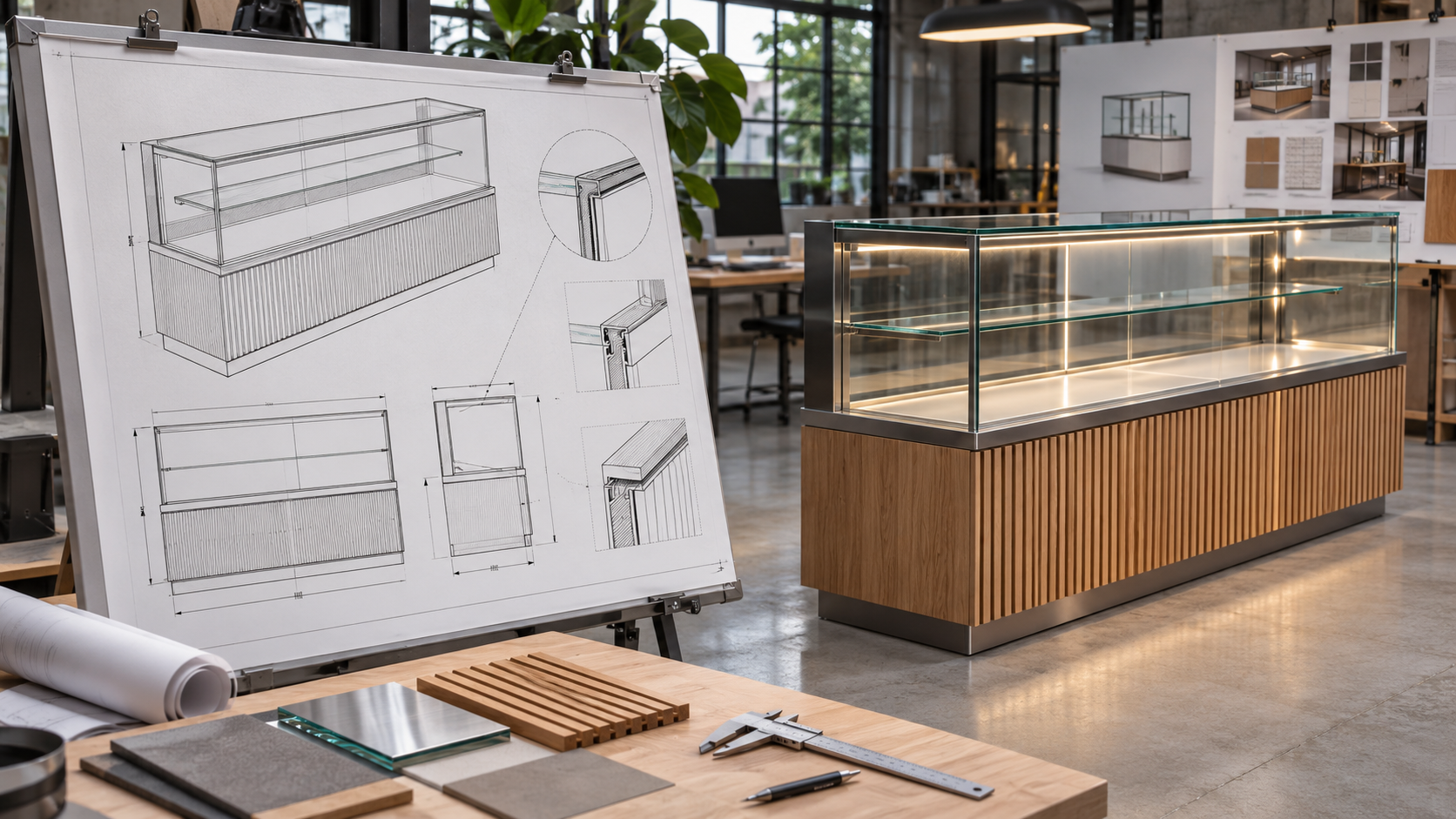
For shipment readiness, the buyer should state the intended function, quantity, dimensions, finish and relationship to nearby fixtures. This is especially important when custom counters, cabinets and display fixtures must be quoted against one consistent item schedule. The drawing or schedule should identify the item code, reference dimension, approval owner and any open decision. Record what is fixed and what may vary by store, and state the acceptable tolerance or adjustment method where it matters. During review, test the requirement against use, cleaning, assembly and maintenance. Ask the person who receives or installs the unit to check access and handling. A detail that works in a rendering may still be difficult to assemble or service on site. For an international order, put the requirement in the fixture schedule or approved drawing rather than leaving it in an informal message. Identify the item code, who approves it and what evidence will demonstrate compliance. Where information is not final, mark it provisional and agree the confirmation date before production starts.
Final sourcing checklist
For final sourcing checklist, the buyer should state the intended function, quantity, dimensions, finish and relationship to nearby fixtures. This is especially important when custom counters, cabinets and display fixtures must be quoted against one consistent item schedule. The drawing or schedule should identify the item code, reference dimension, approval owner and any open decision. Record what is fixed and what may vary by store, and state the acceptable tolerance or adjustment method where it matters. During review, test the requirement against use, cleaning, assembly and maintenance. Ask the person who receives or installs the unit to check access and handling. A detail that works in a rendering may still be difficult to assemble or service on site. Ask the receiving or installation team to review the detail before the production release. They can identify access, handling, storage or maintenance constraints that may not appear in a rendering. Record decisions with the correct revision so purchasing, factory inspection and site teams use the same project baseline.
Frequently asked questions
What should I send to request a shopfitting quote?
Provide a dimensioned plan, fixture schedule, quantities, finish references, destination, delivery date and installation responsibilities. Confirm the details in writing before production so buyer, factory and installer are aligned.
Can retail fixtures be shipped flat-packed?
Many modular fixtures can ship flat-packed if joints, hardware and instructions are designed for the intended use. Confirm the details in writing before production so buyer, factory and installer are aligned.
How do I compare manufacturers?
Compare specification, quality controls, packing, documents, schedule, communication and delivery terms alongside unit cost. Confirm the details in writing before production so buyer, factory and installer are aligned.
Explore Bluecons’ made-to-order capabilities on the custom furniture manufacturer in Vietnam page.